

Daytrippen Adventures: Unusual Ontario Headstone Inscriptions and Forgotten Stories. But what if I told you that a walk through an old cemetery could also uncover a murder mystery, a coded message, a little-known piece of Ontario history, and perhaps even a good laugh?
Well, you’re in the right place!
What Are Headstone Inscriptions?
Headstone inscriptions, commonly called epitaphs, are short phrases, verses, or statements carved into a headstone or tombstone.
Their purpose is to commemorate someone who has passed away. An inscription might tell us something about a person’s character, beliefs, achievements, or the way they lived. Sometimes, it offers a final message to those who visit the gravesite.
But not every inscription is solemn or straightforward. Some tell fascinating stories, some leave us scratching our heads, and others raise questions that may never be answered.
How This Daytrippen Adventure All Started
The story began with a simple idea: forget the usual humdrum tourist attractions for a change.
Sometimes, the most interesting Daytrippen adventures are sitting quietly beneath our feet, carved into stone and waiting to be noticed.
An old cemetery might not be the first place that comes to mind when planning a day trip. However, if you enjoy history, unusual discoveries, photography, or a good mystery, you might be surprised by what you find.
Here are a few examples of what you could discover.
Dark Times: The Black Donnellys Story
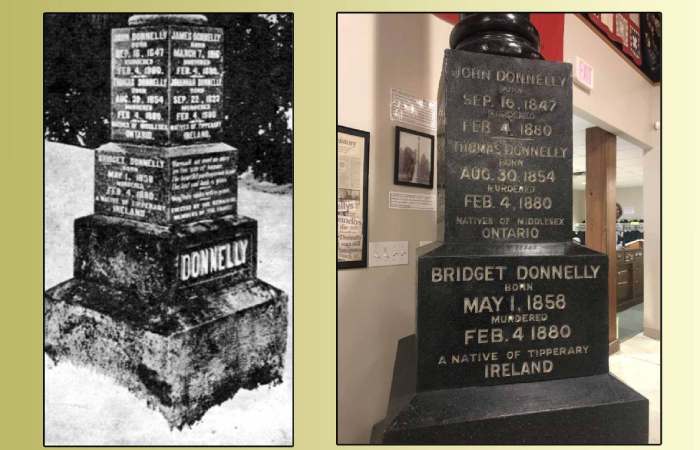
After reading Thomas P. Kelley’s original book, The Black Donnellys: The True Story of Canada’s Most Barbaric Feud, about the notorious family feud of the 1880s, we drove about 100 miles to the small community of Lucan, Ontario, to see the headstone inscription for ourselves.
The Black Donnellys remain one of the most notorious stories in Ontario folklore. The family met a violent end in 1880, and their story has continued to attract readers, historians, and curious visitors.
What made the original headstone particularly striking was its use of the word “Murdered” to identify the victims. That’s a powerful statement to carve into stone, and certainly not something you see every day.
Unfortunately, the original inscription was eventually removed, reportedly because of the attention it attracted from visitors.
The story lives on, however, and the Donnelly Cemetery remains connected to one of Ontario’s most infamous historical tales.
George Muir Hendrie — Hamilton
This is one of my favourites because the wording sounds almost impossible.
George Muir Hendrie’s memorial reportedly contained the phrase:
“Buried in the Louisville Cup.”
Now, doesn’t that sound as though somebody put the man inside a horse-racing trophy?
Of course, an unusual inscription like this makes you want to investigate further. What did the wording mean, and what was the story behind it?
That’s part of the attraction of cemetery exploring. One strange phrase can lead you down an unexpected historical rabbit hole.
The Crosshill Cryptogram — Waterloo Region
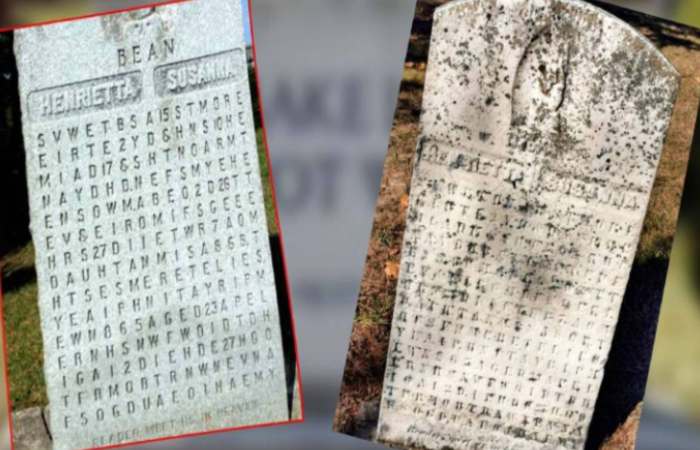
Here’s another Ontario gravestone with a mystery attached: the Crosshill Cryptogram.
For years, people tried to decipher the unusual markings or coded message on this headstone, searching for an explanation of what the inscription might mean.
The puzzle even attracted historical interest, with the Ontario Historical Society featuring a chapter titled The Crosshill Cryptogram and Puzzle.
Apparently, after years of speculation, the code has finally been solved. Yet the inscription itself remains difficult to read, adding another layer of intrigue to this small cemetery.
Imagine stumbling across something like this while out for an ordinary walk!
A Soldier’s Final Words
Not every unusual inscription is a mystery. Some offer a glimpse into the lives of people who lived through difficult times.
Consider this verse associated with a soldier who died during the War of 1812:
Here lies within this silent grave,
A Royal soldier, brisk and brave,
Who suddenly was called away,
From off this sodden foot of clay.
There is something moving about these words. They remind us that behind every name carved into stone is a person with a life, a story, and a place in history.
Major General Sir Isaac Brock and the Battle of Queenston Heights
Ontario’s cemeteries and historic monuments also preserve the memory of those who fought and died defending Upper Canada during the War of 1812.
Major General Sir Isaac Brock, the British commander and Lieutenant Governor of Upper Canada, died on October 13, 1812, during the Battle of Queenston Heights.
His name and sacrifice are commemorated at Brock’s Monument in Queenston, Ontario.
The memorial also connects to the story of Lieutenant-Colonel John Macdonell, Attorney General of Upper Canada, who was mortally wounded during the same battle.
A brass tablet commemorates Macdonell with the following inscription:
Near this spot, Lieut-Col. John MacDonell, Attorney General of Upper Canada, was mortally wounded on 13th Oct. 1812.
Macdonell is buried within Brock’s Monument.
These memorials are reminders that a walk through a historic burial ground or monument site can become much more than a casual outing. It can open a window into the people and events that helped shape Ontario.
Every Headstone Is a Book Cover
Every headstone is a book cover; every cemetery is a library of forgotten stories.
That is what makes this unconventional Daytrippen adventure so interesting. You never know what you might discover when you take the time to read the inscriptions.
And apparently, there are even names for people who enjoy this pastime.
You might hear them called tombstone tourists, grave hunters, or cemetery enthusiasts. The best-known term is taphophile, referring to someone with a particular interest in cemeteries, gravestones, and funerary history.
These enthusiasts explore burial grounds to read old epitaphs, examine headstone architecture and artwork, research genealogy, and appreciate the quiet history found in cemeteries.
There is certainly no shortage of interesting inscriptions to discover.
Could Cemeteries Inspire Famous Writers?
Now, for those of you who prefer a museum for a day’s entertainment, I should warn you: this isn’t your regular day-tripping adventure.
But it could prove interesting nonetheless.
Cemeteries can offer more than historical information. They can also provide inspiration for writers, researchers, photographers, and anyone who enjoys a good story.
Charles Dickens is often associated with the story that he encountered the name Ebenezer Scroggie on a gravestone in Edinburgh, which inspired the name Ebenezer Scrooge. However, the details of this popular account are disputed.
Writers of horror and dark fiction have also drawn inspiration from graveyards, death, and the stories surrounding them. Cemetery imagery and the mystery of death have long played a part in literature.
There is no definitive count of authors who have acknowledged finding inspiration in gravestone inscriptions. Nevertheless, it is easy to understand how an unusual epitaph or a forgotten name could spark an idea.
Which brings me to an interesting question.
Could Thomas P. Kelley, the author of the famous Black Donnelly story, have begun some of his research by examining headstones and investigating the gruesome history surrounding the Donnelly family?
It’s an interesting possibility, although I haven’t established that this was how his research began.
An unusual headstone inscription can certainly generate interest in history, literature, and genealogy. The stories of the Black Donnellys and the fallen soldiers of the War of 1812 show just how much history can be connected to a single place or memorial.

More Than Just Names Carved in Stone
Headstone inscriptions can tell us about much more than the dates of someone’s birth and death.
Depending on the person and the period, you might discover:
- History: Stories of soldiers, pioneers, and people involved in significant events.
- Pathos and emotion: Words expressing grief, love, and remembrance.
- Morality and religion: Messages about faith, the afterlife, and how people should live.
- Patriotism: Tributes to those who served their country.
- Mystery: Cryptograms, unusual wording, and inscriptions that leave more questions than answers.
- Humour: Epitaphs that offer an unexpected laugh or a glimpse of someone’s personality.
And yes, a cemetery can even be a good place for birdwatching and still photography. That’s a little play on words for those who enjoy taking photographs!
Of course, visiting a cemetery should always be done peacefully and respectfully. These are places of remembrance, and the people buried there deserve consideration.
Is Cemetery Exploring a Daytrippen Adventure?
Could a gravestone enthusiast sneaking a peek at an unusual headstone inscription be considered a Daytrippen adventure?
I think so.
Could a walk through a cemetery provide ideas for a story, a book, or even a blog article like the one you’re reading?
Absolutely.
You don’t always need an expensive admission ticket, a crowded tourist attraction, or a long drive to find something interesting. Sometimes, all you need is a little curiosity and a willingness to look beyond the obvious.
Conclusion: Discovering Ontario’s Forgotten Stories
As you can see, there are plenty of fascinating epitaphs and commemorative inscriptions carved into headstones throughout Ontario.
From the dark history of the Black Donnellys to the puzzle of the Crosshill Cryptogram, and from unusual wording to memorials honouring fallen soldiers, these inscriptions offer glimpses into the past that you might otherwise overlook.
It’s no wonder taphophiles, tombstone tourists, grave hunters, and cemetery enthusiasts spend time exploring burial grounds. They read old epitaphs, study historical architecture and artwork, research family histories, and appreciate the quiet stories that cemeteries preserve.
So, the next time you pass an old cemetery, perhaps take a moment to look around. You might discover a piece of history, an unsolved mystery, an unexpected laugh, or an idea for your next adventure.
After all, you never know what stories are waiting to be read in stone.
That’s Daytrippen!
WARNING, This is not your run of the mill ‘Daytrippen Adventure‘ that I normally suggest for a family outing. However, it is an interesting way of spending a day and BONUS, getting a little exercise.
By David Wettlaufer
Daytrippen bit of wisdom: You don’t need to book a flight to take a vacation. Explore the small towns 🔗 in your own backyard. Get lost in the local lore, take in the sights, walk the main street, & find your new favourite getaway close to home. “And you can still be home for supper.”
Inn at Lock Seven: A Unique Welland Canal Experience in Thorold. 🔗
Daytripping: Must See Roadside Attractions in Ontario 🔗
More Travel Links
Small Town Canada – Highlighting small towns in a big way! 🔗